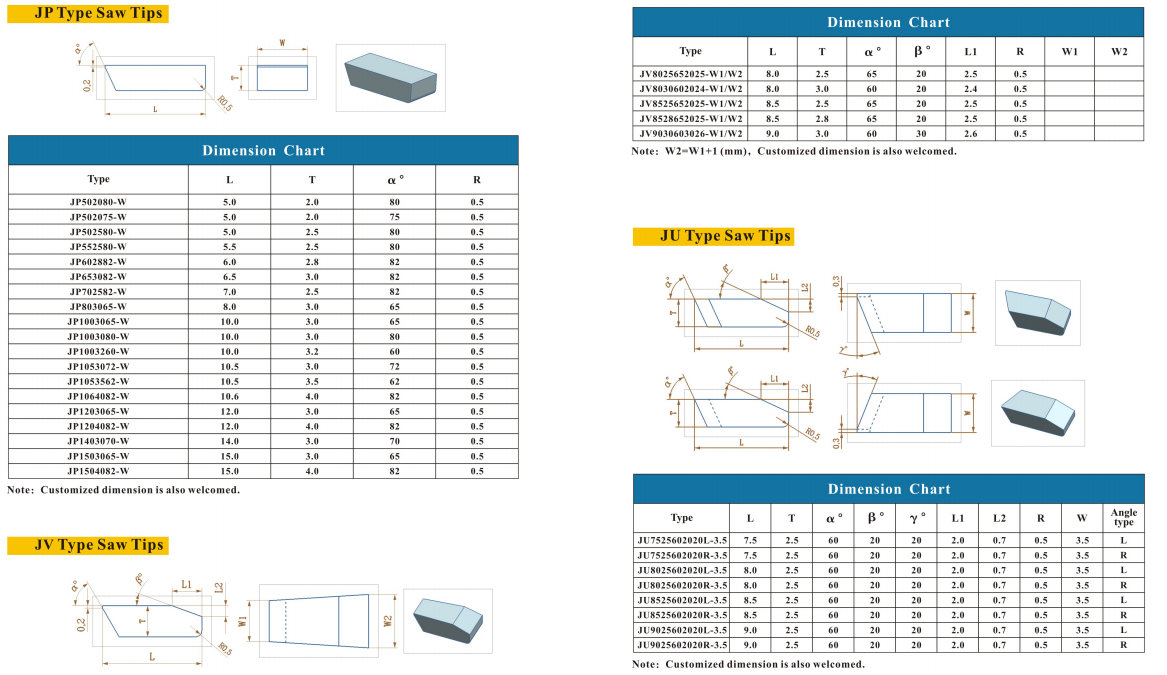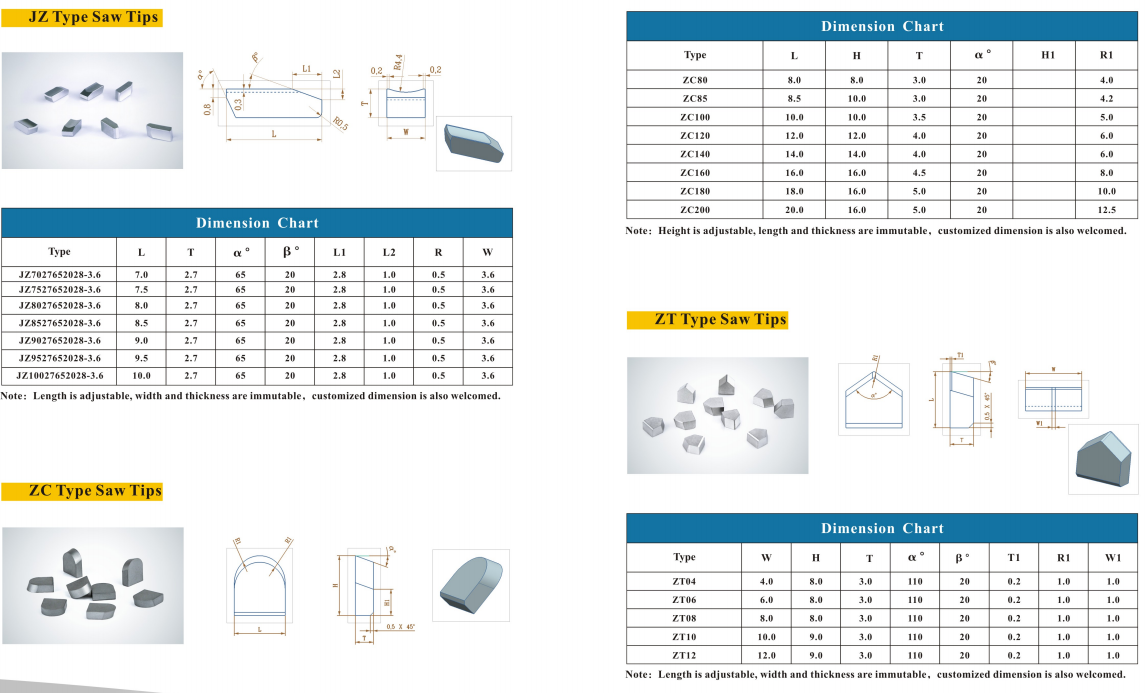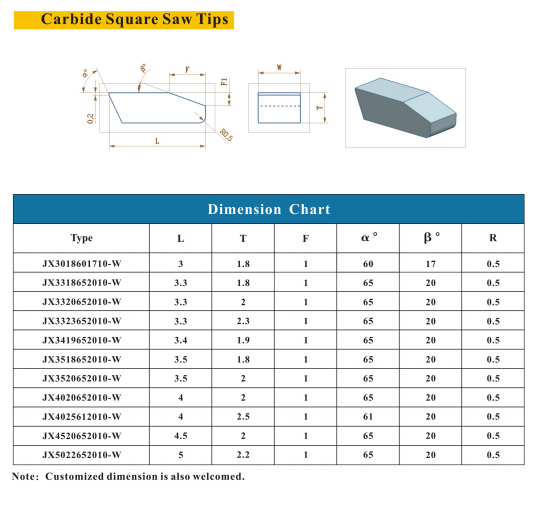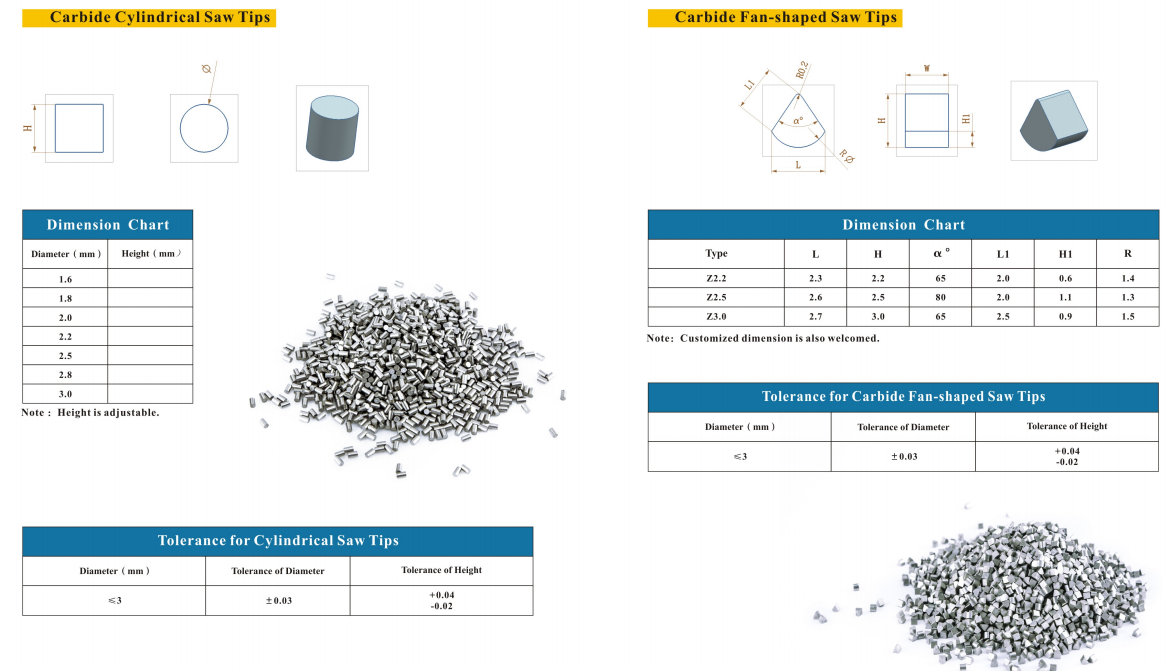


In the demanding world of professional woodworking, where precision, speed, and longevity are paramount, the cutting edge quite literally defines success. At the heart of high-performance circular saw blades and cutting tools lies a critical component: the tungsten carbide saw tip. Specifically, grades like YG6 and YG8 represent the pinnacle of engineered materials designed to meet the rigorous challenges of modern wood processing. Understanding their properties and optimal applications is key to unlocking superior cutting performance and maximizing return on investment.
The Superiority of Tungsten Carbide: Beyond Conventional Steel
Traditional high-speed steel (HSS) tools, while adequate for some tasks, fall short under the intense pressures and abrasive nature of wood composites, hardwoods, and laminates. Tungsten carbide (WC), a cermet material composed of hard tungsten carbide particles bonded within a cobalt matrix, offers a quantum leap in performance:
- Exceptional Hardness (HRA 88-92): Significantly harder than HSS, enabling carbide tips to maintain a sharp cutting edge far longer, resisting deformation and wear from abrasive wood fibers, resins, and contaminants.
- Outstanding Wear Resistance: The primary mechanism of failure for saw blades is flank wear and cratering. YG6/YG8 carbide exhibits superior resistance to abrasion, drastically extending blade life and reducing downtime for resharpening or replacement.
- High Compressive Strength: Essential for withstanding the enormous forces generated during cutting, especially in thick stock or dense hardwoods, preventing tip fracture or chipping.
- Retained Toughness: While extremely hard, properly formulated carbide grades possess sufficient toughness to withstand impact loads encountered during cutting knots, nails (in reclaimed wood), or minor misalignments.
Decoding YG6 and YG8 Engineering for Specific Needs
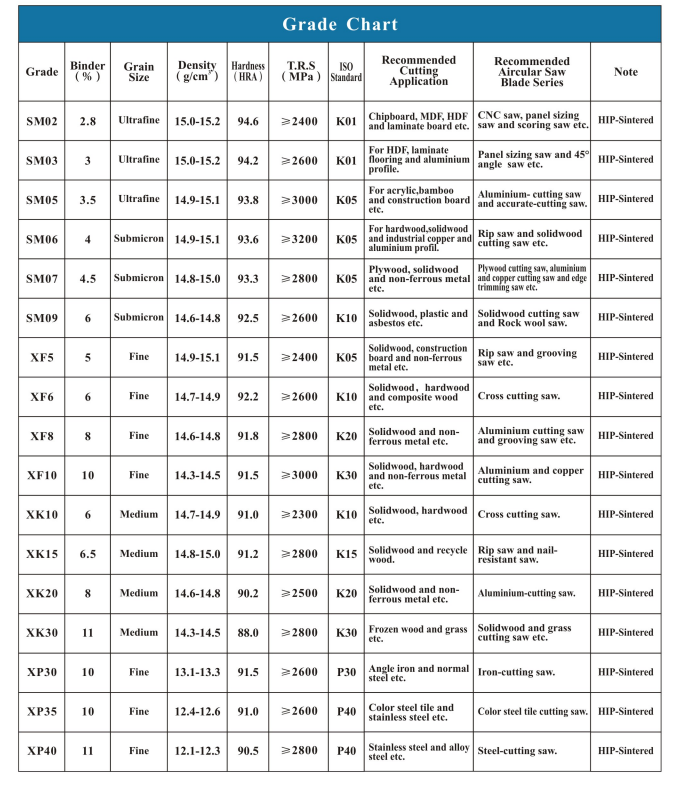
Not all carbide grades are created equal. The "YG" designation (common in ISO standards) signifies a Tungsten Carbide-Cobalt alloy. The number indicates the approximate percentage of Cobalt (Co) binder:
-
YG6 Tungsten Carbide (Approx. 6% Co):
- Character: Slightly harder and more wear-resistant than YG8 due to the lower cobalt content.
- Strengths: Superior edge retention, excellent resistance to abrasive wear. Ideal for achieving the cleanest cuts and finest finishes.
- Ideal Applications: Precision cutting of abrasive materials like MDF, laminates (melamine, HPL), and softwoods. Perfect for fine-finish saw blades and panel sizing operations where minimal tear-out and maximum sharpness life are critical. Excels in continuous cutting applications.
-
YG8 Tungsten Carbide (Approx. 8% Co):
- Character: Slightly higher cobalt content provides enhanced toughness and impact resistance compared to YG6.
- Strengths: Superior resistance to chipping and fracture. Better performance under shock loads and intermittent cutting conditions.
- Ideal Applications: Cutting hardwoods (oak, maple, hickory), knotty wood wood products with significant density variations, and potentially wood containing minor embedded contaminants. Excellent for ripping, general-purpose cutting, and applications where the blade might encounter more unpredictable stock. Favored for thicker kerf blades and higher feed rates.
The Tangible Benefits for Your Woodworking Operation
Investing in saw blades tipped with high-quality YG6 or YG8 carbide translates directly to operational efficiency and cost savings:
- Dramatically Extended Blade Life: Significantly more linear feet cut per sharpening cycle compared to HSS or lower-grade carbide, reducing consumable costs and machine downtime.
- Consistent, High-Quality Cuts: Maintain sharpness throughout the production run, ensuring smooth, precise cuts with minimal tear-out, chipping, or burning. This reduces secondary finishing work and material waste.
- Increased Productivity: Longer intervals between blade changes and resharpening mean more time spent cutting and less time on tool maintenance. Ability to handle higher feed rates reliably.
- Versatility & Reliability: The right grade (YG6 or YG8) chosen for the specific material and application ensures reliable performance across a wide range of woodworking tasks, from delicate veneer work to heavy-duty ripping.
- Reduced Total Cost of Ownership (TCO): While the initial investment is higher than HSS, the vastly superior lifespan and performance of YG6/YG8 carbide tips result in a significantly lower cost per cut over the blade's lifetime.
Selecting the Optimal Tip: YG6 vs. YG8
The choice between YG6 and YG8 isn't about one being universally "better," but about matching the material properties to the cutting demands:
| Feature | YG6 Carbide | YG8 Carbide | | :--------------- | :------------------ | :------------------ | | Cobalt Content | ~6% | ~8% | | Primary Trait | Wear Resistance | Toughness | | Hardness | Slightly Higher | Slightly Lower | | Impact ResistBest For | Abrasive Materials, Fine Finishing | Hardwoods, Knotty Wood, Variable Conditions |
Consult your blade manufacturer or supplier to select the perfect grade and tooth geometry configuration for your specific saw, machine, and primary material mix. A blade engineered with the correct YG6 or YG8 tips is a fundamental pillar of a high-performance, profitable woodworking operation.
Conclusion: The Cutting Edge of Performance
YG6 and YG8 tungsten carbide saw tips represent the fusion of advanced materials science and practical woodworking expertise. Their unparalleled combination of hardness, wear resistance, and tailored toughness (YG6 for abrasion, Y impact) provides the foundation for durable, precise, and efficient cutting. By understanding these grades and specifying them appropriately, woodworking professionals gain a decisive competitive advantage – blades that last longer, cut cleaner, and contribute significantly to a smoother, more productive, and ultimately more profitable workflow. Elevate your cutting capabilities; demand the performance engineered into YG6 and YG8 carbide.